
Air Quality Sensors
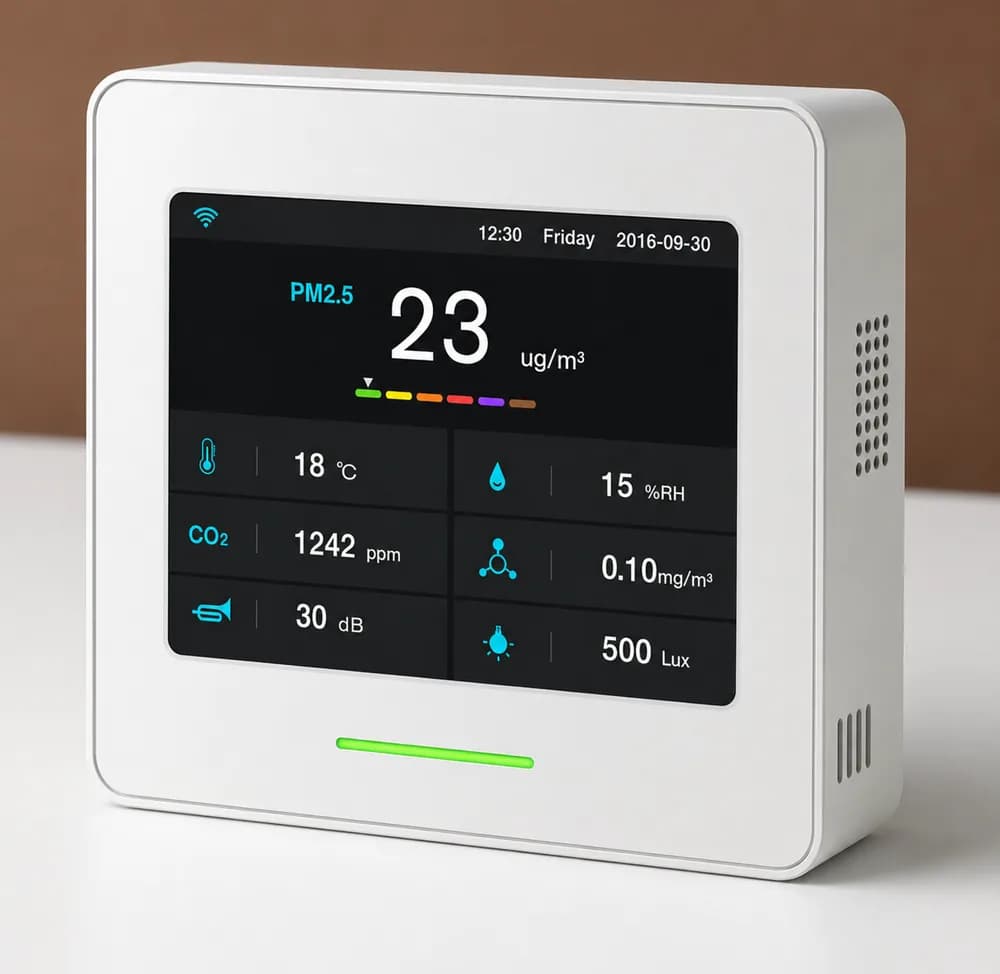
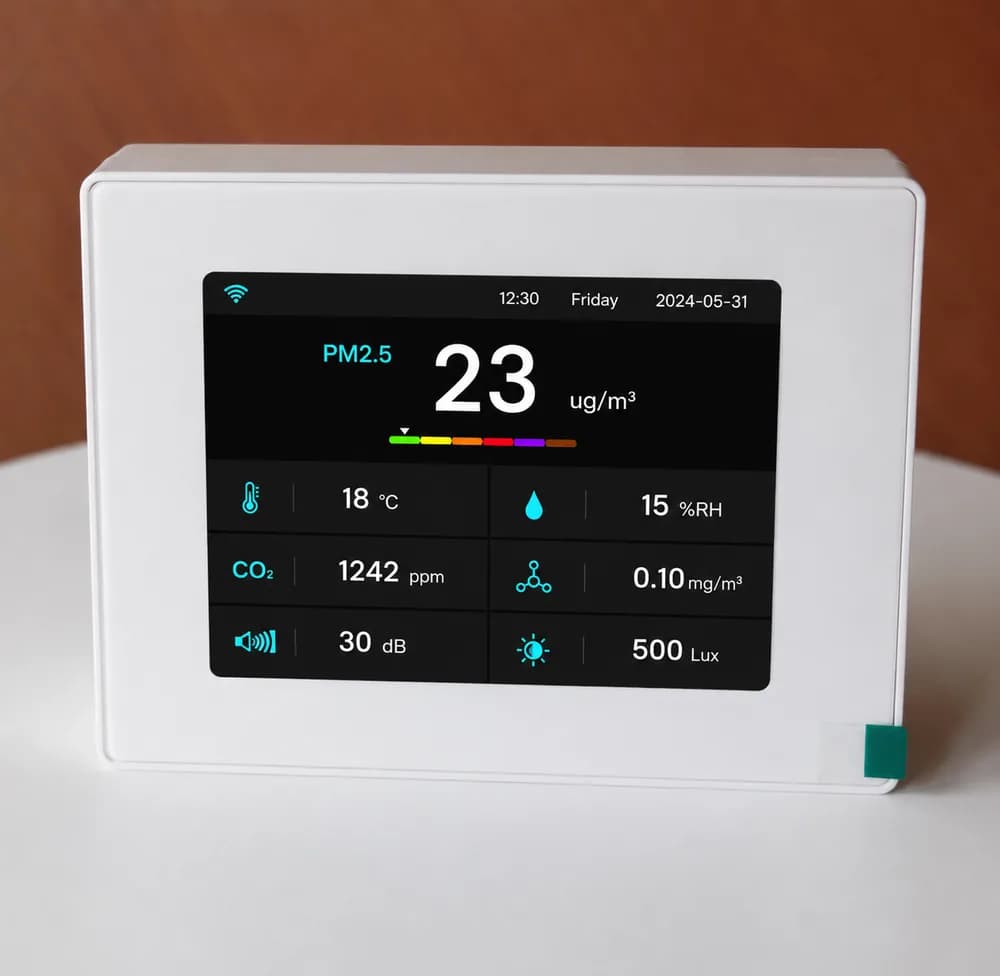
7-in-1 Indoor Air Quality Sensor
- Modbus
- DC
- Indoor
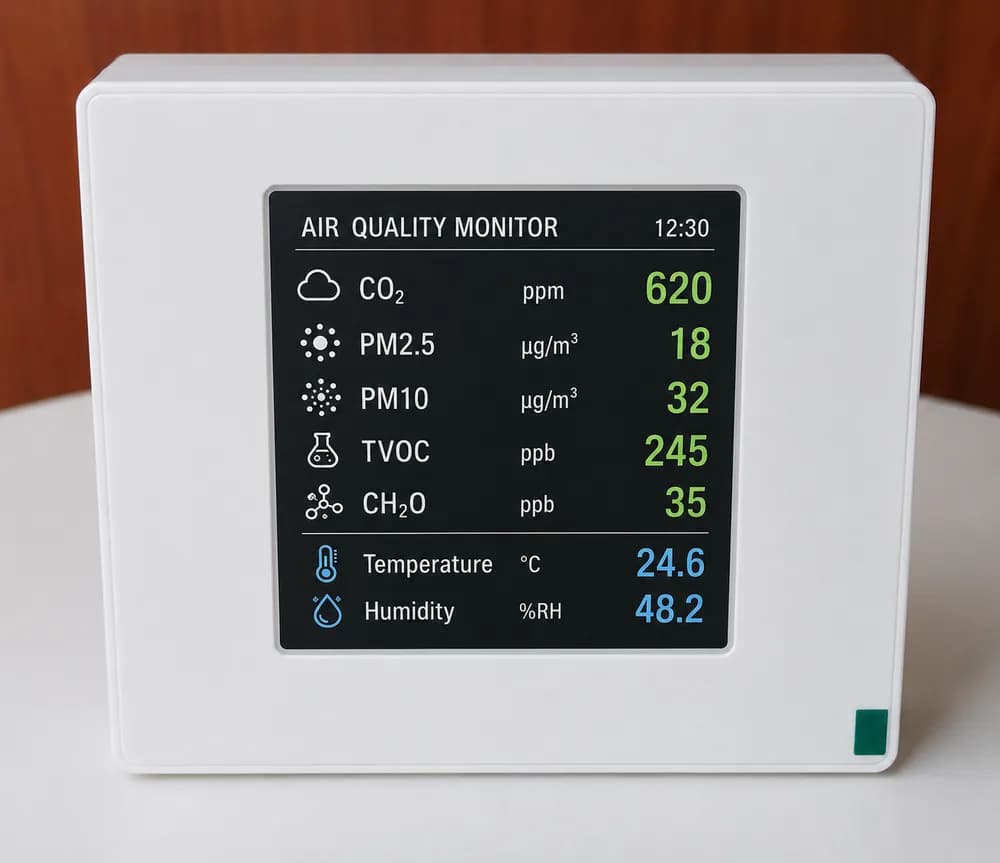
Advanced multi-parameter indoor air quality monitor measuring CO2, PM2.5, PM10, TVOC, temperature, humidity, and light levels.
Specifications
| Sensors | CO2, PM2.5, PM10, TVOC, Temp, Humidity, Light |
|---|---|
| CO2 Range | 400–5000 ppm |
| PM2.5 Accuracy | ±10 μg/m³ |
| Communication | Modbus RTU / Wi-Fi |
| Display | 2.4" TFT |
| Power | USB-C 5V |
| Protection | IP30 |
| Certifications | CE, FCC, RoHS |
Specifications may vary by model and region. Final selection is confirmed during solution design.
Applications
Where the 7-in-1 Indoor Air Quality Sensor is used
Indoor air quality monitoring turns comfort complaints into data: CO₂ shows ventilation performance, particulates show filtration, and temperature and humidity show HVAC balance.
- CO₂-based demand-controlled ventilation
- PM2.5 and PM10 monitoring during dust events
- Wellness and green-building reporting
- Classroom, office and meeting-room air quality dashboards
- Outdoor air quality stations for communities and campuses
How it connects
The 7-in-1 Indoor Air Quality Sensor communicates over Modbus RTU. It can be wired into an existing BMS or SCADA, or connected wirelessly by pairing it with a Modbus-to-LoRaWAN converter that polls its registers and sends them over LoRaWAN, which avoids new data cabling.
Installation notes for UAE projects
- Sensors are mounted at breathing height, away from supply diffusers, doors and windows.
- Outdoor stations need protection from direct sun and dust; solar-powered options suit locations without power.
- Thresholds and alerts are set to your building's standard and occupancy.
FAQ
Air Quality Sensors — questions
Which parameters should we monitor?
For offices and schools, CO₂, temperature, humidity and PM2.5 cover most needs. TVOC and noise are useful where there are specific complaints or certification requirements.
Can air quality data control ventilation?
Yes. CO₂ readings can be passed to the BMS to drive fresh-air dampers or fan speeds.
Used in
Solutions using this device
Selecting devices for a project?
Tell us about your site, assets and existing systems. A LoRaWAN specialist will review your requirements and propose a practical architecture — no obligation.