
Solution
Industrial IoT
Industrial sites are full of capable machines that simply are not connected. MatrixAI brings their data online — machine status, alarms, energy and process values — using protocol converters, wireless I/O and industrial gateways, so you gain visibility without replacing control systems.
- What problem do we solve?
- Machines and PLCs with valuable data but no connectivity to the business
- How do we solve it?
- Assess → Convert → Integrate → Monitor
- What technologies do we use?
- LoRaWAN, Modbus, RS485, 4–20 mA, DI/DO, CAN, OPC UA, MQTT
- What can we integrate?
- SCADA, Historians, MES / ERP, CMMS, Cloud IoT platforms
The problem
Connect legacy equipment without replacing what already works
- Machines and PLCs with valuable data but no connectivity to the business
- Cabling across large plants, yards and warehouses is slow and expensive
- Alarms are local to the panel and missed when no one is present
- Remote sites require manual visits for routine readings
- Mixed vendor protocols make integration complex
Our approach
How we solve it
- 1
Assess
Map assets, protocols, signals and the data that actually matters to operations.
- 2
Convert
Use Modbus, RS485, 4–20 mA, DI/DO and CAN converters to bring signals onto LoRaWAN or IP.
- 3
Integrate
Publish to SCADA, historians and the IoT platform via OPC UA, MQTT or REST.
- 4
Monitor
Dashboards, alarm escalation and reports for operations and maintenance teams.
Architecture
How the system fits together
- 01
Machines & PLCs
Modbus · RS485 · I/O
- 02
MatrixAI Converter
Protocol conversion
- 03
LoRaWAN / IP
Wireless or wired
- 04
Gateway & Server
Private network
- 05
SCADA / Platform
OPC UA · MQTT
Capabilities
What industrial iot covers
Applications
- Machine running / stopped status
- Alarm and fault monitoring
- Remote monitoring of distributed assets
- Energy per machine or line
- Compressed air, pressure and flow
- Tank and silo levels
Connectivity
- Modbus RTU / TCP
- RS485 serial
- 4–20 mA and 0–10 V analog
- Digital inputs and outputs
- CAN where applicable
- OPC UA / SCADA integration where required
Technologies we use
- LoRaWAN
- Modbus
- RS485
- 4–20 mA
- DI/DO
- CAN
- OPC UA
- MQTT
What we integrate with
- SCADA
- Historians
- MES / ERP
- CMMS
- Cloud IoT platforms
Outcomes
- Visibility of previously unconnected equipment
- Faster alarm response
- Reduced site visits
- Data foundation for condition-based maintenance
Devices
Typical devices for this solution
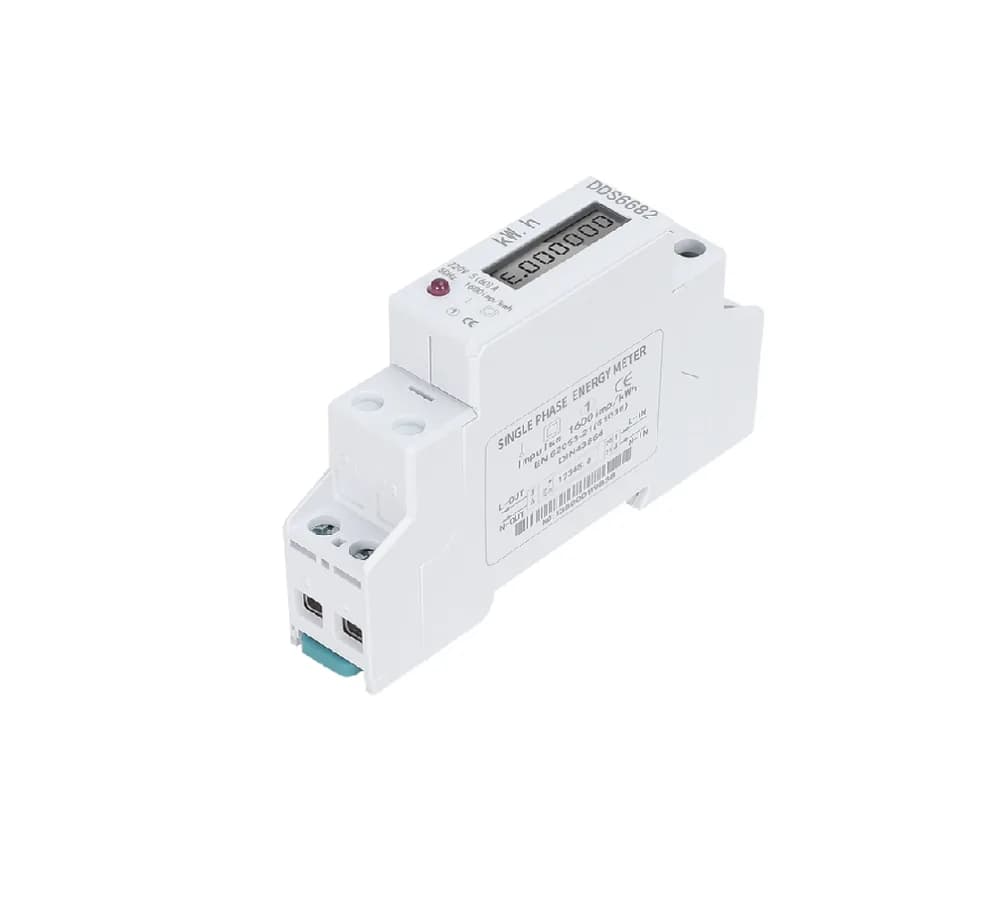
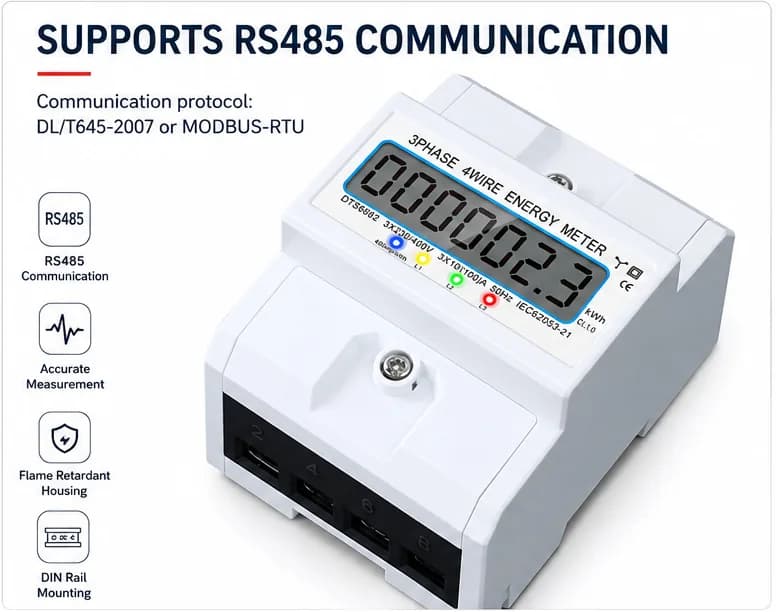
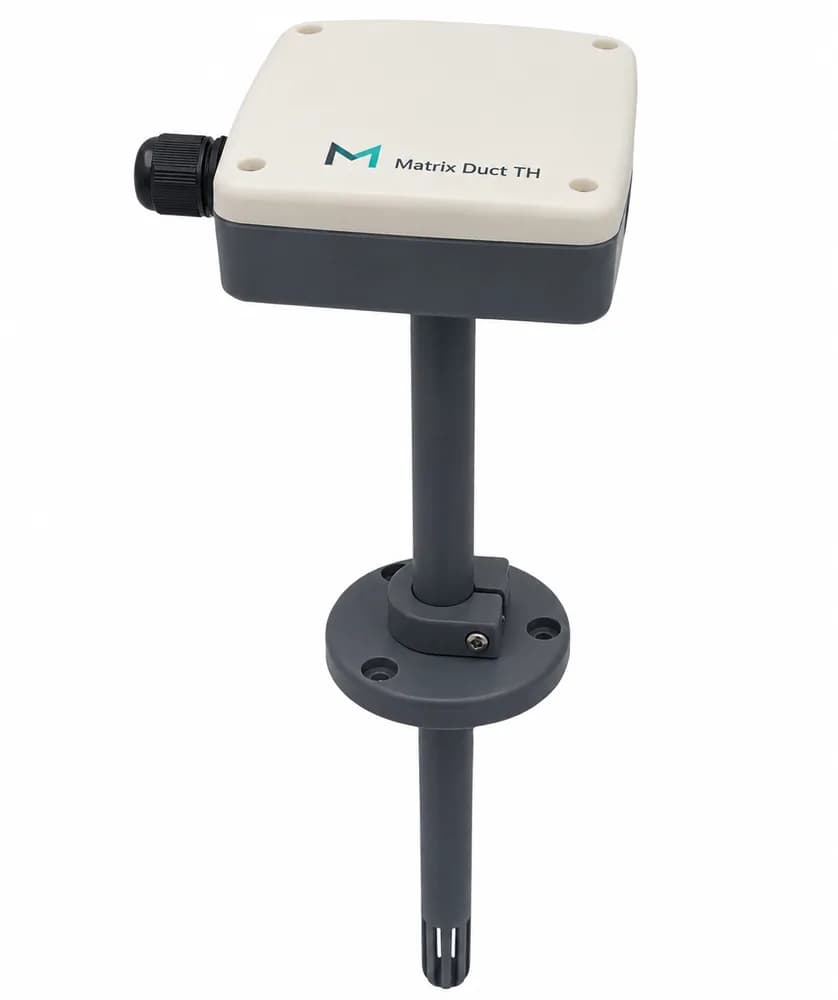
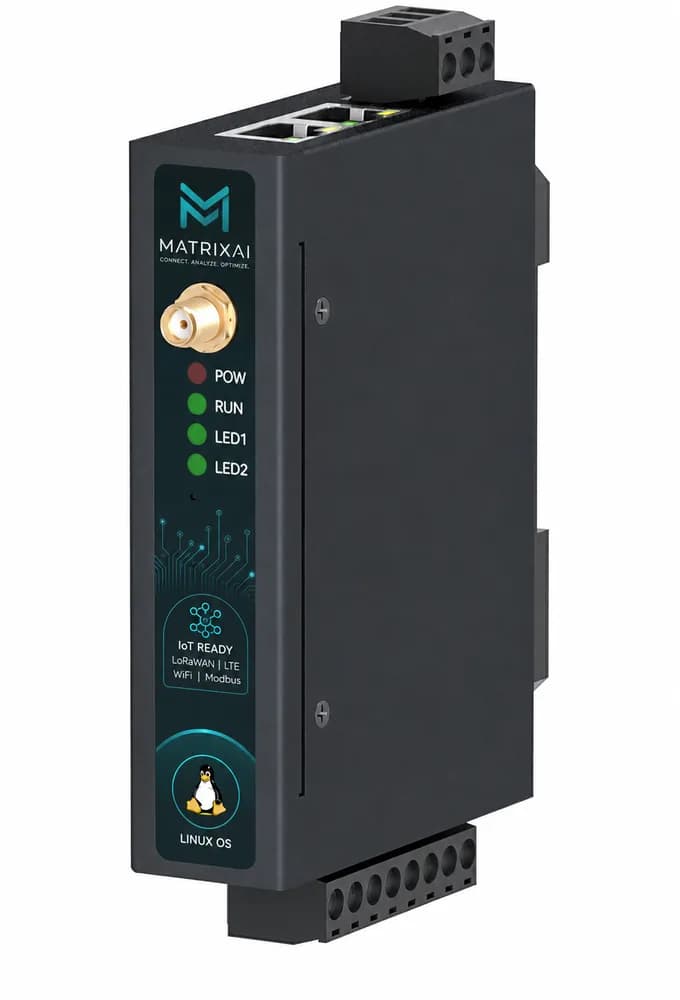
Industries
Where this is used
Other solutions
FAQ
Industrial IoT — questions
Will connecting our PLCs affect existing control?
We design integrations as read-only by default, polling data without changing control logic. Write/control actions are only added when explicitly required and approved.
Is LoRaWAN suitable for fast industrial control?
No — LoRaWAN is designed for low-data-rate monitoring, not real-time control loops. For fast control we keep the existing wired system and use LoRaWAN for monitoring, alarms and slow setpoint changes.
Planning a industrial iot project?
Tell us about your site, assets and existing systems. A LoRaWAN specialist will review your requirements and propose a practical architecture — no obligation.