
Protocol conversion & integration
Modbus, BACnet, M-Bus and more — connected to LoRaWAN
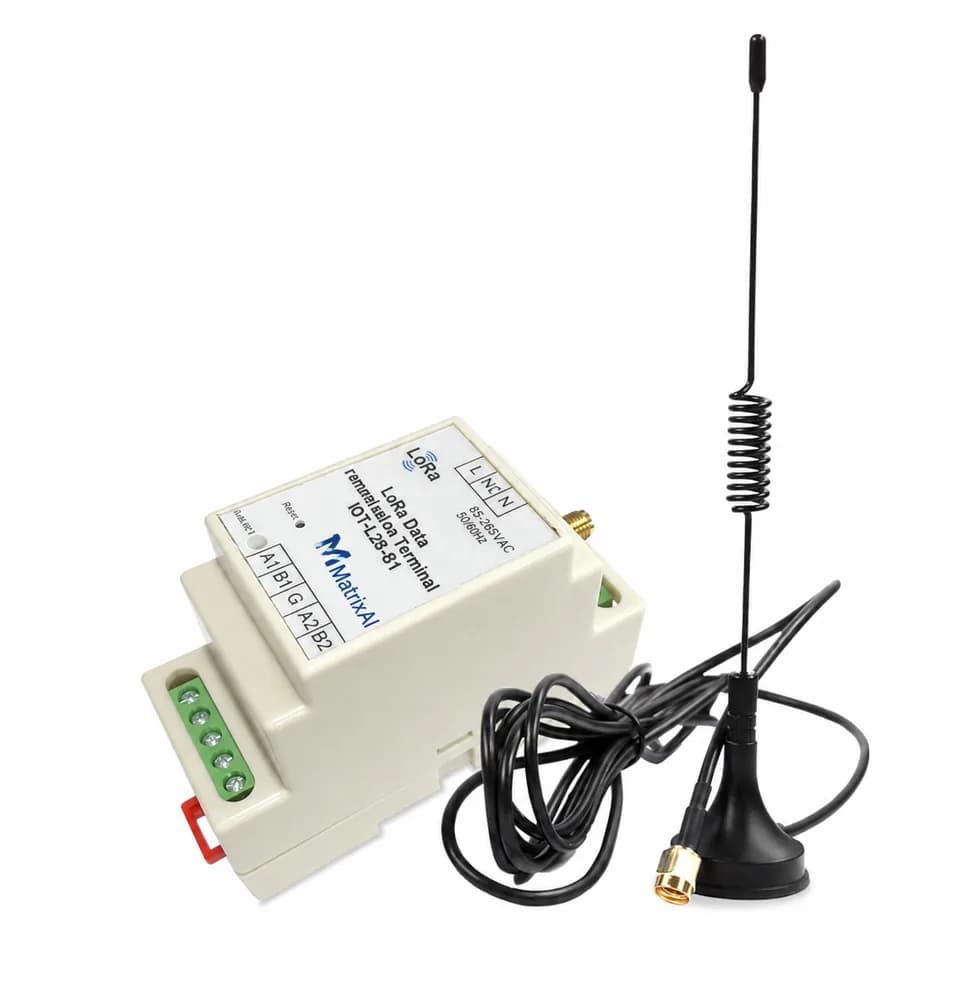
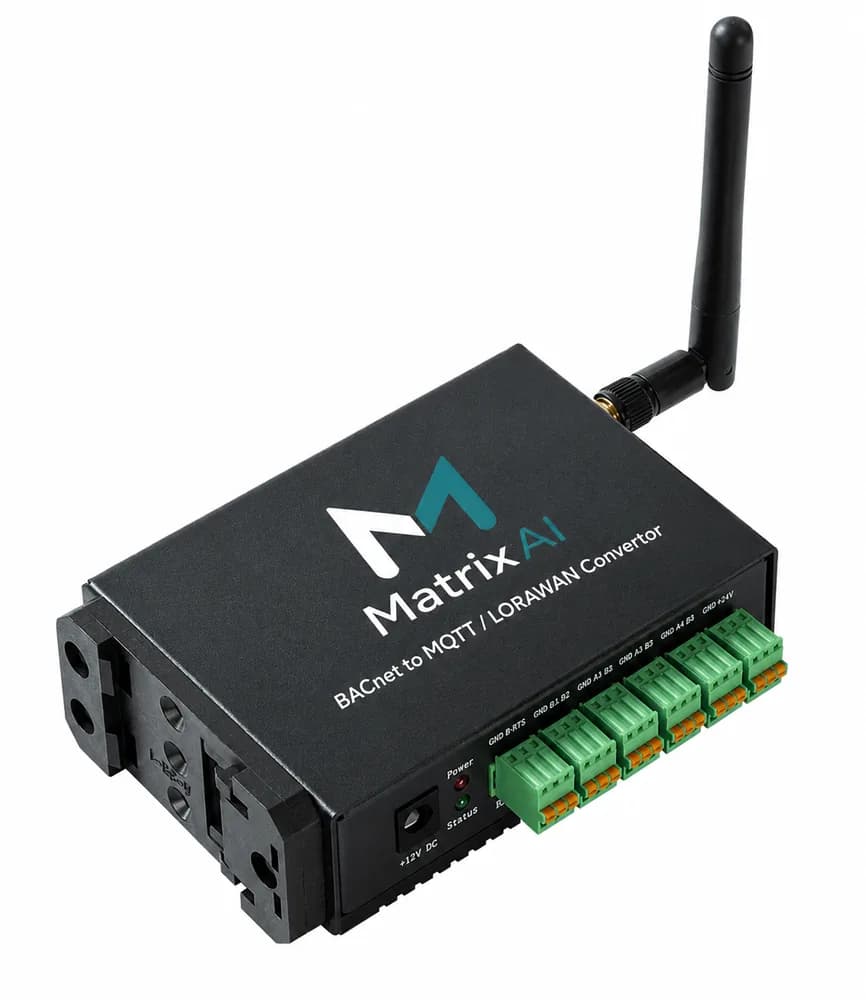
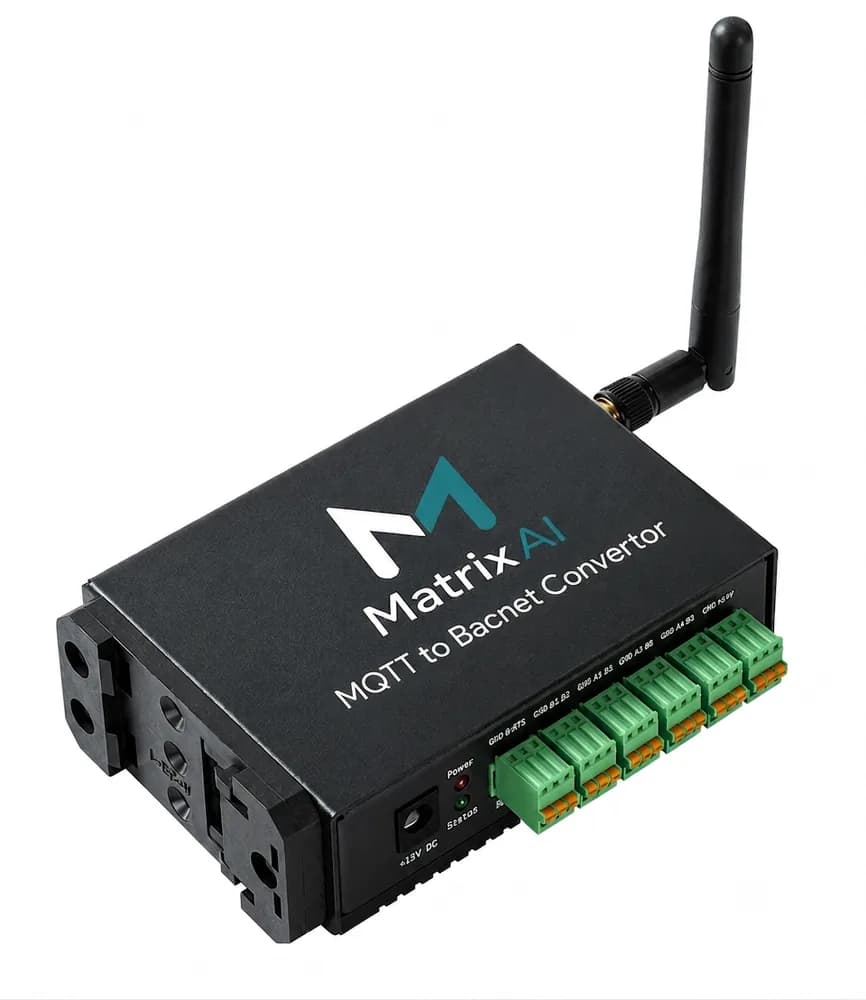
Protocol conversion is a core MatrixAI capability. We connect existing meters, controllers and industrial equipment to LoRaWAN, and deliver their data to BMS, CAFM, SCADA and IoT platforms — two-way where appropriate.
- What problem do we solve?
- Valuable data is locked inside equipment that speaks wired, vendor-specific protocols.
- How do we solve it?
- Converters and gateways poll, map and decode data, then send it over LoRaWAN or IP — with downlink for control.
- What technologies do we use?
- Modbus RTU/TCP, BACnet IP/MS/TP, M-Bus, RS485, pulse, 4–20 mA, DI/DO, CAN, MQTT, REST, OPC UA
- What can we integrate?
- IoT platforms, BMS, CAFM/CMMS, SCADA, historians, billing and cloud services
Architecture
Field equipment → MatrixAI gateway → LoRaWAN / IP → platform
MatrixAI Gateway / Converter
Polling · Mapping · Decoding · Downlink
Delivered to
- IoT Platform
- BMS
- CAFM / CMMS
- SCADA
- Cloud & BI
via MQTT · REST · BACnet · Modbus TCP · OPC UA
Integration library
Every protocol, its own engineering approach
Modbus RTU / TCP ↔ LoRaWAN
Modbus is the most common protocol on energy meters, VFDs, chillers, pumps and PLCs.
BACnet IP / MS/TP ↔ LoRaWAN
BACnet is the language of building automation.
M-Bus / wM-Bus ↔ LoRaWAN
M-Bus is widely used on water, heat and BTU/chilled-water meters.
RS485 serial ↔ LoRaWAN
RS485 is the physical layer behind many industrial and building devices.
Pulse output → LoRaWAN
Millions of installed meters have a pulse output that is never used.
4–20 mA / 0–10 V → LoRaWAN
Industrial transmitters for pressure, level, flow and temperature typically output 4–20 mA.
Digital inputs / outputs ↔ LoRaWAN
Many assets expose simple dry contacts — run, trip, alarm, door open.
CAN bus → LoRaWAN (where applicable)
CAN bus carries rich data in generators, vehicles and machinery.
MQTT & REST API integration
Once devices are on the network, the data must reach the systems where decisions are made.
OPC UA / SCADA (where required)
Utilities and industrial operators run on SCADA.
LoRaWAN downlink for remote control
LoRaWAN is not only for reading data.
Compatibility is project-dependent when vendor-specific profiles, certification, timing, security or implementation details affect integration. We validate each device type before deployment.
FAQ
Protocol integration questions
Is protocol conversion always two-way?
Not always. Reading data (uplink) is supported by almost all converters. Writing back (downlink) depends on the converter, device class and the target equipment — we show two-way integration where it is appropriate and safe.
Will every Modbus or BACnet device work?
Most standard devices can be integrated, but vendor-specific profiles, certification, timing and security features can affect integration. Compatibility is project-dependent and validated during design.
Do we have to replace our BMS or SCADA?
No. The purpose of protocol conversion is to connect what you already have, and deliver data into the systems your team already uses.
Have equipment that needs connecting?
Tell us about your site, assets and existing systems. A LoRaWAN specialist will review your requirements and propose a practical architecture — no obligation.