
Protocol integration · Two-way
LoRaWAN Downlink & Remote Control
LoRaWAN is not only for reading data. With the right device class and design, downlink messages can open valves, switch relays, change thermostat setpoints and dim streetlights.
- What problem do we solve?
- Control over LoRaWAN fails when device class, gateway capacity and confirmation are not engineered properly.
- How do we solve it?
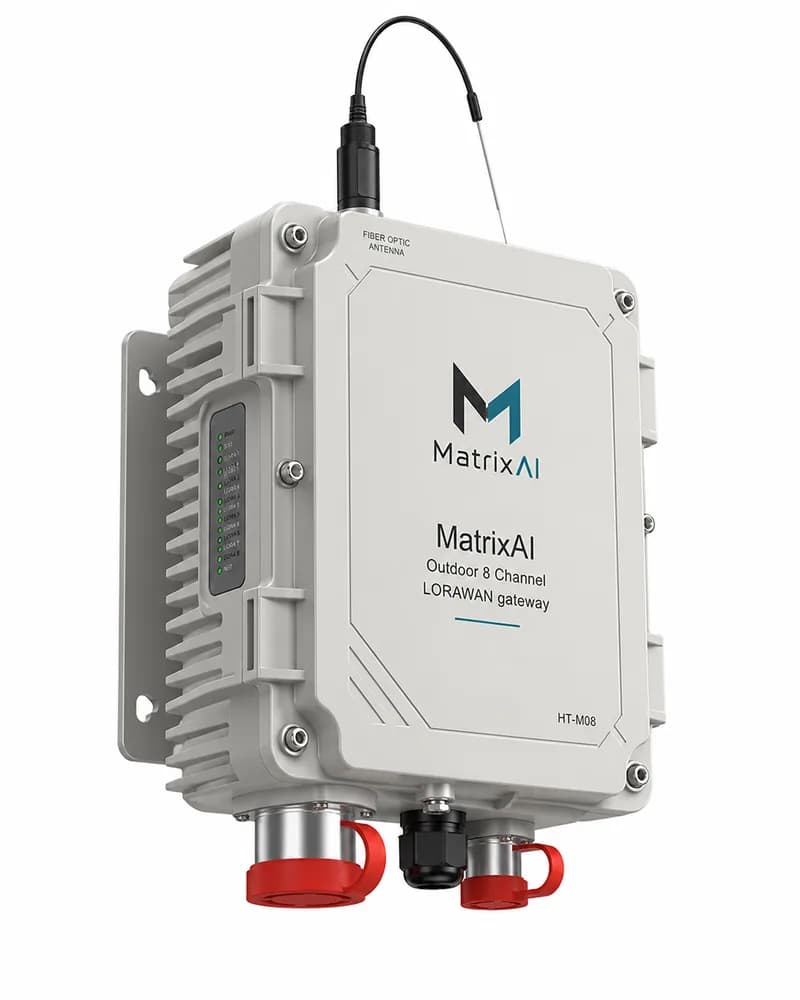
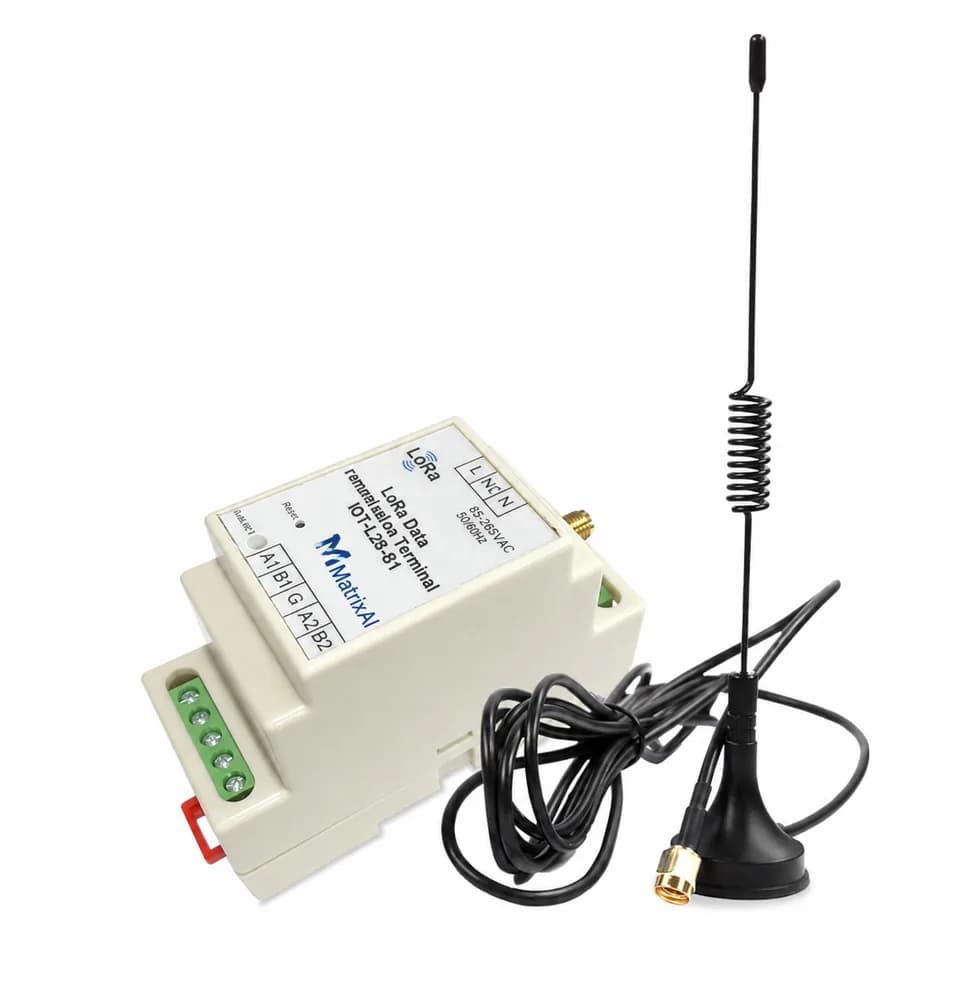
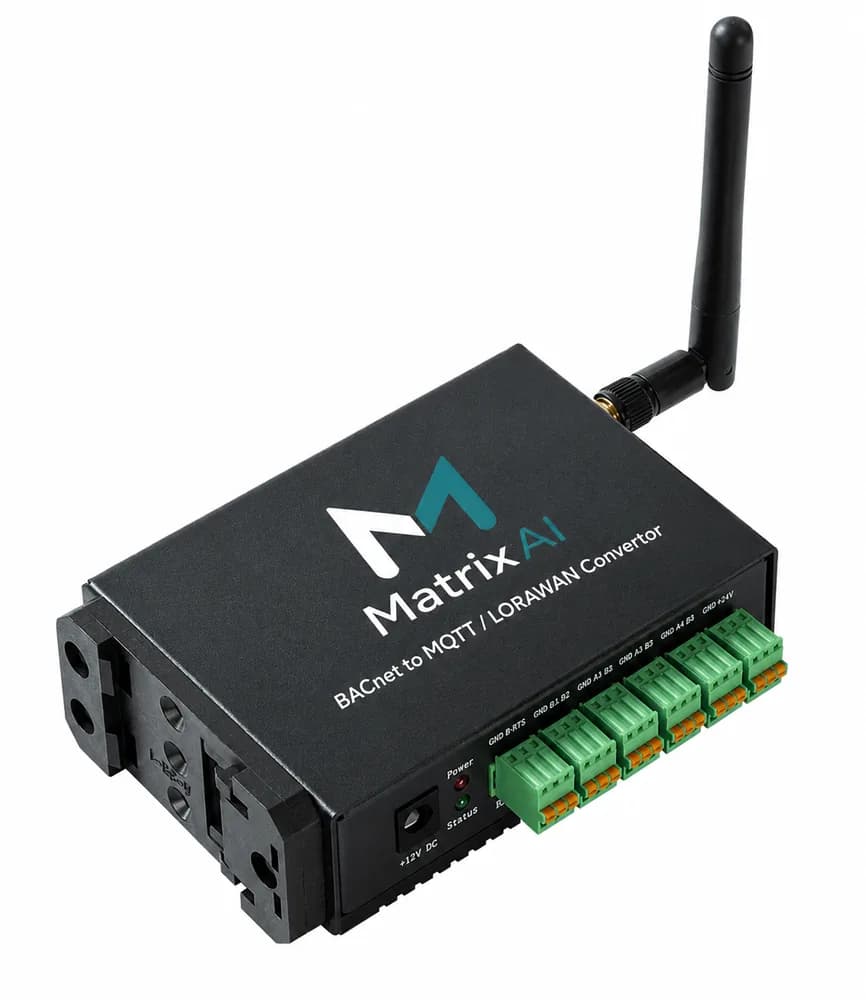
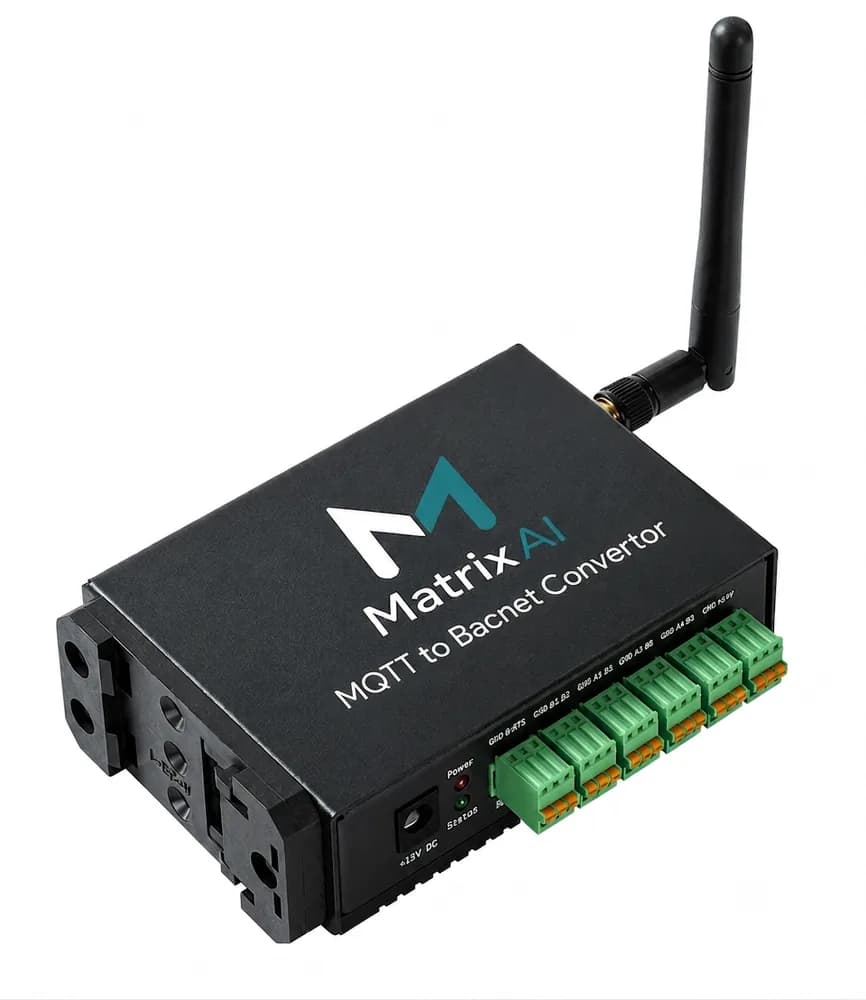
- MatrixAI engineers the LoRaWAN downlink for remote control conversion — device audit, converter selection, mapping, decoding and commissioning.
- What technologies do we use?
- Downlink, LoRaWAN, network server codecs, MQTT / REST
- What can we integrate?
- IoT platforms, BMS, CAFM, SCADA, billing and cloud services
Architecture
LoRaWAN downlink for remote control
- 01
Operator / Rule
Command
- 02
Platform
Queue & confirm
- 03
Network Server
Downlink scheduling
- 04
Gateway
Transmit
- 05
Device
Valve · Relay · Thermostat
How we do it
Engineering steps
- 01Choose device class (A, B or C) per application
- 02Plan gateway downlink capacity and duty cycle
- 03Implement confirmed commands and state feedback
- 04Build scheduling and group commands where needed
Typical data points
- Command acknowledgement
- Resulting device state
- Configuration parameters
Use cases
- Leak-triggered valve shut-off
- Thermostat setpoint changes
- Streetlight dimming schedules
- Remote device reconfiguration
More integrations
Other protocols
FAQ
Downlink integration questions
Can a leak sensor automatically close a valve?
Yes. A leak alarm can trigger a rule that sends a downlink to a motorised valve. Where response time is critical, the valve can also act locally.
Need LoRaWAN downlink for remote control integration?
Tell us about your site, assets and existing systems. A LoRaWAN specialist will review your requirements and propose a practical architecture — no obligation.